 Your playerMaking a name…
Cards · 3–8 min
Blackjack
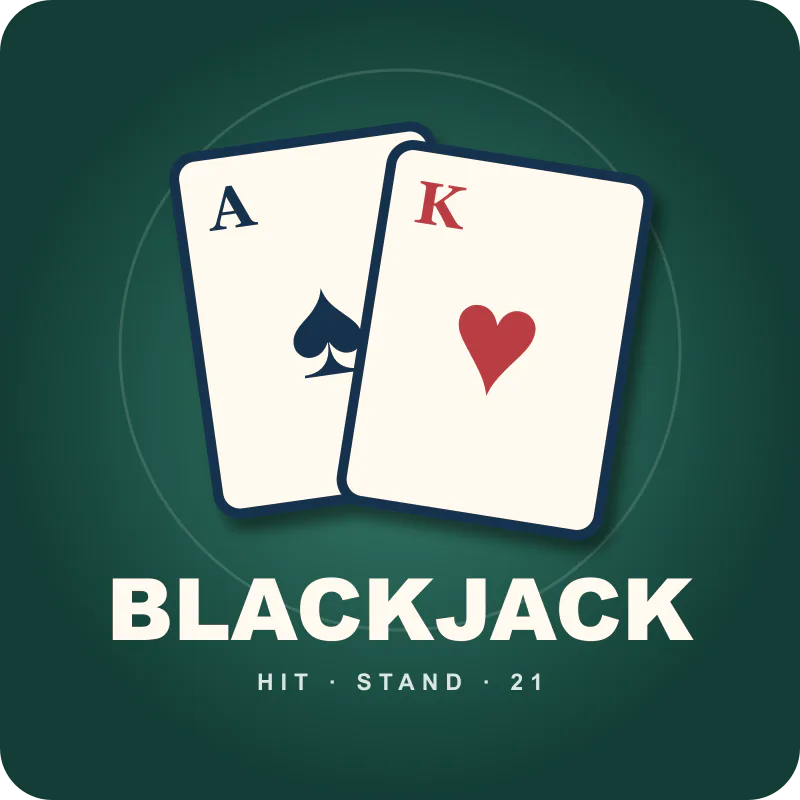
Play free Blackjack against the dealer. Hit, stand, double, split pairs, and build a virtual bankroll without real-money wagering.
1 playertouch · mouse · keyboardany layout
Offline ready
Ready to play online or offline after the first visit
Loading the record saved for this player…
- Times Played
- —
- Record
- —
- Best
- —
How to play Blackjack
Play from one shared 52-card deck, then hit, stand, double, or split. A dealer blackjack ends the hand immediately; matching natural 21s push.
About Blackjack
A quick, offline-friendly single-deck table game with persistent virtual chips, periodic shuffles, and no real-money gambling.
Start with a plan
How to play Blackjack
These notes cover the controls, rules, and decisions in this browser version.
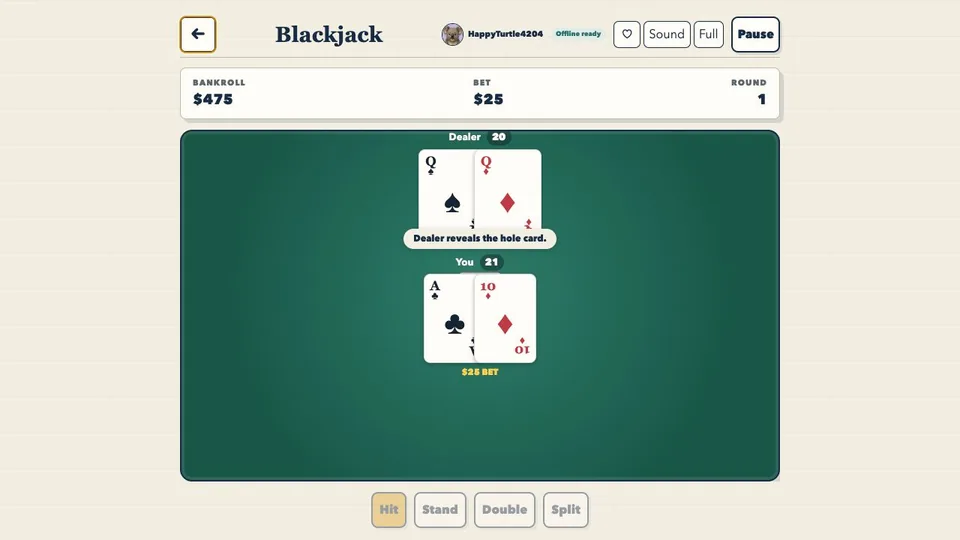
Play a round
- Blackjack uses one 52-card deck. It is reshuffled about every four hands with one or two players, or every other hand with three or four players.
- Set a virtual-chip wager and deal. Number cards keep their value, face cards count as 10, and an ace counts as 1 or 11.
- Choose hit for another card or stand to keep the current total. Going above 21 busts the hand immediately.
- Double to double the wager and receive exactly one more card, or split an eligible pair into two separately played hands.
- After every player hand stands or busts, the dealer draws according to the table rules and the game settles virtual chips.
- A dealer natural blackjack ends the hand immediately. Every player loses unless their first two cards are also a natural 21, which is a push.
Strategy for this version
- Use the dealer up-card as the main signal: weak dealer cards make standing safer, while strong cards often require a more aggressive draw.
- Treat a hand containing an ace counted as 11 as flexible because one additional card may reduce the ace to 1 instead of busting.
- Split aces and eights for stronger starting positions, but keep tens together and avoid splitting fives that make a useful total of 10.
- Virtual chips have no cash value, so use the bankroll to learn how each decision changes outcomes rather than chasing losses.
Keep playing